

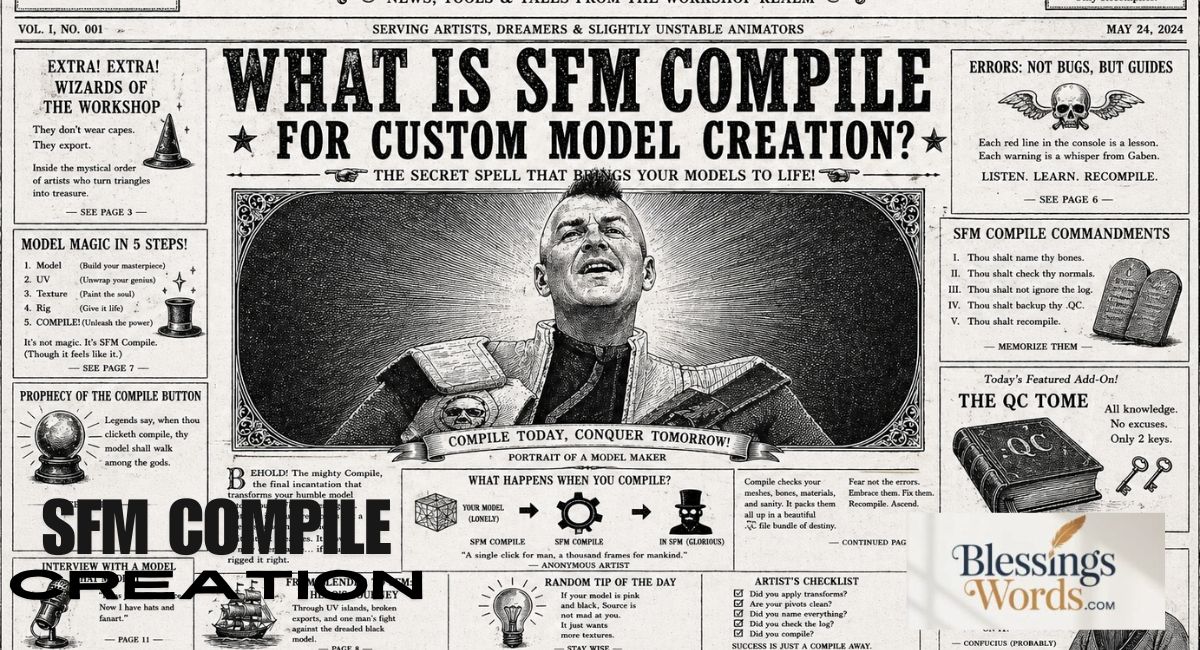
What Is SFM Compile For Custom Model Creation
SFM Compile For Custom Model Creation transforms raw 3D assets into usable Source Engine formats. It converts models into the MDL file format, which Source Filmmaker understands. Without this step, Source Filmmaker models will not load properly inside scenes or animation projects.
This process is part of SFM model compilation, where geometry, textures, rigs, and animations merge into one structured file. In simple terms, it acts like a translator between 3D software and Source Engine systems. For example, 3D model conversion ensures Blender creations become usable Source Engine assets inside SFM.
Many creators often ask what is SFM compile process when starting out. The answer is simple. It is a structured pipeline that prepares models for animation use. It connects SFM animation workflow with engine requirements so your custom assets behave correctly inside cinematic scenes.
Essential Software for SFM Compile For Custom Model Creation
SFM Compile For Custom Model Creation depends on a few powerful tools that work together. The most important is studiomdl.exe compiler, which handles final conversion into MDL format. Additionally, creators often use Crowbar tool SFM for easier and faster compilation control.
Most artists rely on Blender for SFM because it supports modeling, rigging, and export options. Alongside it, text editors help manage QC script files, which define how models behave in Source Filmmaker. Without proper tools, the workflow becomes slow and error-prone.
Here is a simple comparison of tools used in SFM compilation:
| Tool Name | Purpose | Importance |
| Blender | 3D creation and rigging | Essential |
| Crowbar tool SFM | Easy compilation control | High |
| studiomdl.exe compiler | Converts models to MDL | Critical |
| Notepad++ | Editing QC script files | Useful |
Creators often search for best tools for SFM model compilation because choosing the right setup improves speed and reduces errors in game asset optimization workflows.
SFM Compile Process Steps in Custom Model Creation
SFM Compile For Custom Model Creation starts with preparation. First, you build your model in Blender or another tool. Then you export it as SMD or FBX for conversion. This step is part of Source Filmmaker compilation process, where structure matters more than speed.
Next, you create QC script files that define model behavior. Many beginners ask how to create QC file for SFM because this file controls everything from textures to animations. After that, you run the compiler using Crowbar or **studiomdl.exe how to use commands through terminal.
A simple workflow looks like this:
- Create model in Blender
- Export mesh and skeleton
- Write QC script
- Compile using Crowbar or studiomdl.exe
- Test inside SFM asset browser
Finally, you check results inside the SFM asset browser. If something breaks, you often deal with texture path errors or missing rig connections. That is why creators also search how to import custom models into SFM during troubleshooting.
Professional Best Practices for SFM Compile For Custom Model Creation
SFM Compile For Custom Model Creation becomes more stable when you follow professional habits. Experienced creators focus on clean topology, correct naming, and proper bone structure setup. These small details improve long-term stability in animation projects and reduce compilation failures.
For example, bone structure setup must match Source Engine rules. If bones are incorrect, animations break inside SFM. Additionally, optimizing assets improves performance, which is part of how to optimize models for Source Filmmaker workflows used in studios.
Here are important professional habits used in real production environments:
- Keep clean folder structure for assets
- Test models after every change
- Reduce unnecessary polygons
- Maintain consistent naming rules
- Validate QC scripts before compiling
These practices support better SFM animation setup tutorial results and improve reliability in complex scenes. Many professionals also follow beginner guide to SFM modeling steps before moving into advanced work.
Common SFM Compile For Custom Model Creation Errors
SFM Compile For Custom Model Creation often fails due to small mistakes. One of the most common problems is missing textures. When this happens, users ask how to fix missing textures in SFM because models appear purple or black in scenes.
Another frequent issue is broken rigs. This leads users to search how to fix broken rig in SFM since animations stop working properly. These issues usually come from incorrect weight painting or mismatched bone names in QC scripts.
Here are common error types explained:
| Error Type | Cause | Effect |
| Missing textures | Wrong file path | Purple model appearance |
| Rig failure | Incorrect bone setup | Broken animation |
| Compile crash | QC syntax error | SFM stops loading |
| Invisible model | Scale issues | Model not visible |
Creators often look for SFM compilation error solutions and why SFM model is not loading because most issues come from simple path or naming mistakes. Learning SFM troubleshooting helps fix them quickly.
Advanced SFM Compile For Custom Model Creation Techniques
SFM Compile For Custom Model Creation becomes powerful when you reach advanced techniques. One key method is using LOD system SFM, which reduces model complexity at distance. This improves performance in large cinematic scenes without losing visual quality.
Another advanced feature is facial flex animation, which allows expressive character emotions. Studios use this to create realistic dialogue scenes. Additionally, physics collision model setup helps objects interact naturally inside environments, improving realism in animation sequences.
Advanced creators also use automation tools. For example, they apply scripts for how to batch compile SFM models, saving hours of manual work. Some even integrate Python tools to streamline the Blender to SFM workflow and reduce repetitive tasks.
As one developer once said:
“Good compilation is invisible. If it works perfectly, you never notice it.”
That idea defines advanced SFM advanced modeling techniques. When everything runs smoothly, your audience only sees the animation, not the technical work behind it.
FAQ’s about sfm compile
What is sfm compile?
It is the process of converting SFM project files into final usable animation output.
Why is sfm compile important?
It ensures smooth rendering and prevents missing assets in Source Filmmaker projects.
How does sfm compile work?
It processes models, lighting, and animation data into a final scene format.
Is sfm compile difficult for beginners?
Yes, but it becomes easier with practice and basic SFM knowledge.
Does sfm compile affect rendering quality?
Yes, it directly impacts stability and final animation output quality.
Why does sfm compile fail sometimes?
It can fail due to missing files, broken models, or incorrect paths.
Can sfm compile fix animation errors?
No, it only processes files, not fix existing animation mistakes.
What tools help with sfm compile?
Source Filmmaker built-in tools handle most compile processes automatically.
How long does sfm compile take?
Time depends on project size and system performance.
Is sfm compile required for every project?
Yes, it is required to generate final usable animation output.
